The Blessing of Adversity
Mark McBrine’s Dad Gets Brain Cancer and Hundreds Benefit
Struggle brings out the best in us. We learn it over and over again. Even nature shows us the value of struggle. Immature immune cells called T cells will only live about three weeks. But, if they are challenged by foreign invader, they mature, they kick into action, and develop antibodies to fight the foreigner. Maturing (also called differentiation) means they now have a purpose in life and know the job they are to do. Once challenged and matured, they can live a long time. They would not ‘grow up’ without being challenged. Neither would we.
Sometimes, it doesn’t take a huge challenge, just a frequent small stressor that makes us stand strong. The Eden Project (right), consists of two completely enclosed biomes, growing thousands of different kinds of plants. Yet, the trees in that “perfect” ecosystem kept falling over. Why? They were not diseased. It turns out that the trees needed wind to make their roots go deeper. The little bit of stress provided by the wind was all they needed to stand tall. No stress, no strength to stand tall.
Then last night I heard David Sinclair, the Harvard aging expert say that he prefers to eat plants that have been stressed while growing because the stress makes the plant produce more chemical defenses to survive which it passes onto us when we eat it. Even kale grown when its cold has more of these defenses than kale grown when it’s warm.
So, it is no surprise that the renowned sociologist, Brené Brown, sees struggle as essential to life:
“I see students come to us who have never had real experiences with adversity.
And how that shows up is hopelessness.
One of the most interesting things I’ve found in doing this work is that
Hope is a function of struggle.”
Brown recalls her own life saying, “The most beautiful things I look back on in my life are coming out from underneath things I didn’t know I could get out from underneath... And I think, ‘my God, those were the moments that made me,’ and they were moments of struggle.”
When I was first diagnosed, I was completely overwhelmed. Not just at the prospect of dying, but that I was faced with a fair number of seemingly life-and-death medical choices, and I felt ill-equipped and terrified making them. I wanted desperately for one doctor to have all the answers and make all the decisions for me. Then I would get three different opinions from three different doctors, and I knew ultimately the choice was mine. I can’t even count the number of times I would say to myself, “I can’t do this.” I just wanted to eat a whole pizza and numb out. Or the number of times I dreaded looking foolish with my questions to the doctor I wanted so much to respect me. I would say to myself feeling almost a black cloud over my head, “I hate this.”
It’s been three and half years. My self-talk is different now. When faced with something hard and scary, I still instantaneously recoil out of reflex. Then something shifts. Then I hear myself saying, “I can do hard things.” That’s my voice of hope. When I say now that I would not trade in my diagnosis to get my old life back, hope is the reason why.
Hope is not an emotion.
Hope is knowing we can experience adversity,
when we have relationships that are trustworthy,
And when we have faith in our ability to get out of a jam. -Brené Brown
Even Reinhold Niebuhr’s famous Serenity Prayer mentions hardship. Beyond the commonly known “God grant me the serenity to accept the things I cannot change, the courage to change the things I can, and the wisdom to know the difference” are lesser-known lines:
“Living one day at a time,
enjoying one moment at a time,
accepting hardship as a pathway to peace”
So, I am intrigued. What can come from adversity?
Sometimes it’s pure beauty. Michaelangelo considered himself a sculptor not a painter. He only agreed to paint the Sistine Chapel because he was desperate for money. Doestoyevsky wrote Crime and Punishment for the same reason. These were not works created out of a life of leisure and ease. In fact, they probably would not have been created at all if their creators had not been sufficiently desperate.
Sometimes it’s gratitude and peace. I imagine ALS being one of the worst diseases to get. It renders the person completely dependent, unable to move his own limbs and often unable to speak without a device. It’s my worst fear. So, when Chris Prendergast (right), former actor, lived with ALS for 20 years, it is hard for me to imagine. Yet, he said,
“Now I consider myself a very lucky man. ALS has made my life richer, bringing experiences I would have never dreamed. It led me back to a path of deeper faith. Certainly, it has made me a better man.”
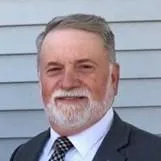
Sometimes it’s benefits to others. Among the countless stories about how adversity has shaped a person’s life, one of my favorites is Mark McBrine’s story. His adversity and what he chose to do with it helped hundreds. McBrine (left) and his family had been Maine organic farmers for decades. Their entire income was based on selling their produce at farmers’ markets, multiple community-supported agricultures, farm shares, and natural food stores.
Then tragedy struck. Mark’s father was diagnosed with brain cancer and ultimately lost so much physical function that he needed intensive 24-hour care. McBrine’s family decided to do everything to keep him at home. “Each of us in the family took turns staying 24 hours a day helping my mom,” McBrine recalls. “As that went on, I had to cut out the farmers’ markets, and I had to cut out different parts of my revenue. I had to find something where I knew my hours.” That’s when he applied for a food service job at Mountain View Correctional Facility in central Maine.
By 2016, McBrine, who had a food service background, had worked his way up into the food service manager position in the prison.
“When I became the food service manager, I looked to try to do some things that would help us have better food products, but also be able to save money, and I knew by the way we had operated our home and fed our children, that if you buy good food and practice home-style scratch cooking, you can end up giving out a lot better product and still save money. That’s the approach we took.”
Perhaps nothing won the hearts and minds of inmates and staff alike more than McBrine’s very first program —the baking program (right). Inmates were hired and trained to bake all bread products from scratch including bagels, dinner rolls, cinnamon rolls, English muffins, pizza crust, hotdog buns, hamburger buns, sub rolls, loaves of bread, pita bread and all desserts.
“This has done a lot for inmate moral; you have virtually done away with legitimate food-based grievances,” says nutritionist Melissa Hemmelgarn about the baking program.
McBrine comments, “When I started, it was not uncommon that there were five to eight legitimate complaints a week about the food. People were not happy with the food...
“Baking our own bread has made such a big difference…When we started making all our baked goods from scratch, people would stop me in the hall and say, ‘Getting those rolls has really been a treat for us.’
It has changed behaviors. Some of our captains who have been here 20 some years, will tell us they know it makes a difference. When people go back to their units after a meal and they are happy, there are just a lot less problems.”
After the baking program, McBrine’s next initiative was organic gardening. Today, Mountain View has a three-acre organic vegetable garden (left) located across from the prison plus a 125-tree apple orchard with 21 different kinds of apples. Inmates cultivate and harvest the organic produce—about 100,000 pounds per year. Any excess produce is donated to other prisons or to food banks.
As McBrine began making healthier food substitutions, he vigorously pursued local food sources. The baking program receives all its flour from a local grainery. Real eggs from a Maine farm have replaced liquid eggs; real potatoes are provided year-round from a local farmer and have replaced boxed potatoes. Today all French fries, home fries, and potato salad start out as a real potato not from a box.
Real cheese from a Maine dairy has replaced American processed cheese at a price lower than processed cheese, which as McBrine says, “Isn’t really cheese.” Real whole chickens cut up and made into paddies have replaced prefabbed frozen chicken paddies.
Today, locally purchased food accounts for about 30% of Mountain View’s food budget.
Scratch cooking is great, but requires many hands, which McBrine says inmates were more than happy to offer. Inmates are paid for their labor, plus they feel positive about providing good food to their fellow residents. Today incarcerated residents make up the majority of the kitchen staff. (left).
When McBrine started, most of the cooking was done by hired state employees. Today, there are 10 or 12 incarcerated residents who are trained in each kitchen skill: there are those who do all the cooking, others who do the serving, and others who do the baking. Today, there are kitchen, baking, and gardening apprenticeship programs offered by the University of Maine agricultural extension services. So, not only can the inmates provide delicious, nutritious meals, but they also get the benefit of the training. They get trained, and later they train others. “I think it’s important if they can train someone, then they actually learn more what their position entails. They train and mentor the ones who will take over when they leave, and that has been really good to see,” says McBrine.
How was the food program affected by COVID? For one thing, they had Thanksgiving in March. When COVID forced schools and restaurants to close, McBrine proactively regularly called Sysco, their major food supplier, seeking discounted food. Persistence paid off.
When the prison was able to purchase whole, free range, local Maine turkeys at 59 cents a pound, McBrine decided it was time to celebrate Thanksgiving, the inmates’ favorite meal, in March.
(Right) Leftover turkey from the Thanksgiving meal was made into turkey pot pie which was topped with homemade biscuits from scratch.
“Comfort food, especially in stressful and intense situations is extremely helpful,” he says. It gave the inmates something to look forward to during the stresses of COVID.
McBrine also thinks Thanksgiving in March was good for the food service workers, many of whom are prison inmates. “It gave them a renewed sense of purpose.”
Another COVID feast. On another occasion, the food supplier offered the prison boneless prime rib at $2.59 a pound, less than the price of hamburger. Another COVID feast
Buy-in is key. Although McBrine’s approach makes sense, looks seamless, practical at every level, and a win-win-win for everyone, he is quick to imply that little would have happened without the buy-in of his warden, Jeff Warren, and the corrections commissioner, Randall Liberty. They let him “show what is possible.”
It seems this model could be replicated in other prisons. But, more often than not, that is not the case.
When there is not buy-in along the chain of command, it’s hard to make nutritional improvements even though prison food across the country is notoriously poor.
A recent survey showed how poor prison food really is. Of 250 formerly incarcerated people in 41 states and interviews with 40 current and former correctional staff,
94% of the respondents said they didn’t get enough food to feel full in prison,
and 75 percent recalled receiving spoiled food, including moldy bread,
sour milk, rotten meat, and slimy salad.
Yet prison improvements such as starting gardens and other health initiatives face immense almost insurmountable obstacles if there is not support up the chain of command as was highlighted in the 2021 seminar “Social and Ecological Infrastructure for Recidivism Reduction.” People from around the country working in prisons shared their successes and struggles.
For example, in one women’s prison, although the women earned the right to grow organic vegetables, there was not sufficient buy-in among the prison’s kitchen staff to even guarantee that the vegetables would end up on the inmates’ plates. One year, during the broccoli harvest, the women decided to microwave the broccoli themselves and eat it with Cheeze Wiz rather than give it to the kitchen and risk not seeing it again.
Maine is a unique model because even at the top level of command, there is enthusiastic buy-in from corrections Commissioner Randall Liberty. Why? The trials in his own life. The state corrections commissioner is like the CEO of the state prison system. Authority rests there. Liberty, as the son of an incarcerated father, remembers both depressing prison visits and the family’s food insecurity when all they had were unappetizing molasses and biscuits. By contrast, he remembers the school cafeteria where the food was good and a relief from the food insecurity at home. Today, Liberty, himself, is a certified master gardener and beekeeper.
In fact, it was Liberty who first asked McBrine to create a composting system in the state prison. Waste disposal is a huge part of prison expenses, and the majority of tonnage comes from food waste. Today, the prison composting system saves the state about $100,000 a year.
It is worth the time to listen to Liberty’s interview in the podcast Mindful Things, Episode March 5, 2019, when he talks about the trials that shaped his life. Uncannily, McBrine and Liberty have found a shared vision in each other, both using their trials to create something that transcends them, proving life’s circumstances do not have the final word.
Adam Lidsky says it best. He learned as a child he would be totally blind in his 20’s, and now counts his blindness as his greatest blessing:
“Whatever circumstances we encounter,
what we do with it, is entirely within our control.
Always there are people who have done far more with far less
and been a lot happier doing it.
And if that is true, it can’t be the circumstances.” -Adam Lidsky
